


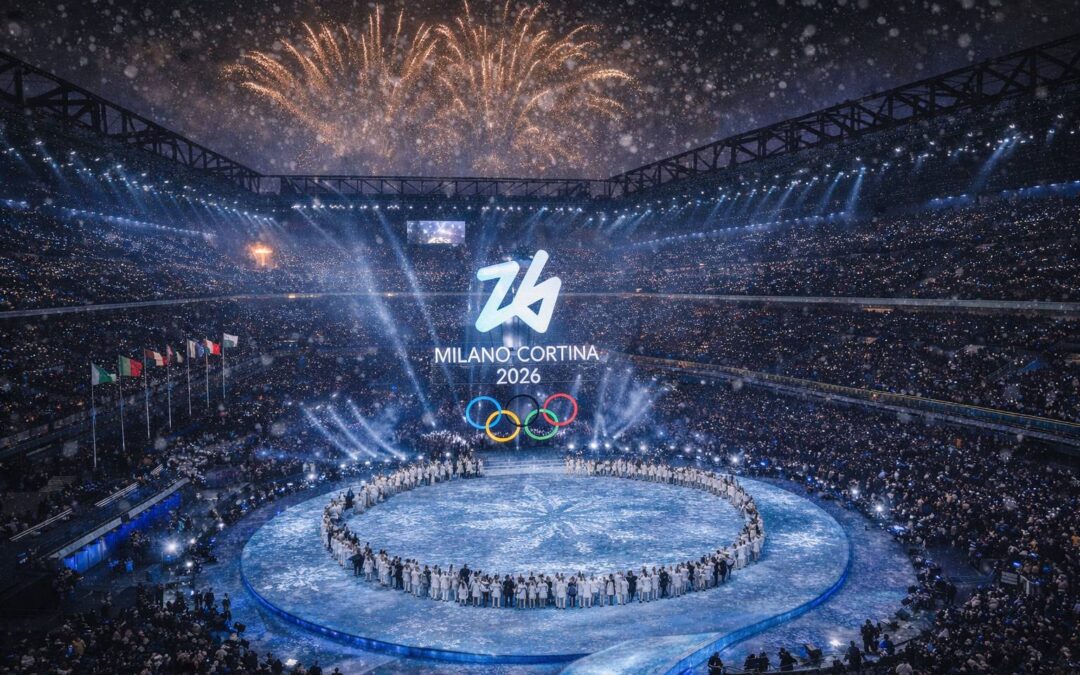
Milan is preparing to step into history. Friday, February 6, 2026 will mark the official opening of the Milano–Cortina Winter Olympic Games, an event that goes far beyond sport and reshapes the way the city presents itself to the world.
The opening ceremony represents the first major symbolic moment of a broader journey that will transform Milan into a global hub of encounter, culture, and exchange. For several weeks, the city will become an international point of reference for athletes, visitors, professionals, and students from every part of the world.
An opening ceremony that goes beyond sport
The opening of the Games will not be limited to an official ceremony. Concerts, cultural events, and live performances will accompany the start of the Olympics, blending sport, music, and urban identity.
Milan has chosen to tell its story in a contemporary language, enhancing its symbolic locations and reaffirming its international vocation. The opening marks the beginning of a new rhythm for the city — one that is more open, more connected, and more visible on the global stage.

The journey of the Olympic flame
One of the most anticipated moments leading up to the Games is the arrival of the Olympic flame, a powerful symbol of unity and continuity.
The journey will last 63 days, crossing 60 cities and covering more than 12,000 kilometers. The flame will depart from Olympia on November 26, 2025, enter Italy in Rome on December 4, pass through Naples during the Christmas period and Bari at New Year, before reaching its final destination.
The Olympic flame will arrive in Milan, at San Siro Stadium, on the evening of February 6, 2026, marking the official beginning of the Games.

Milan during the Olympics
In preparation for the Games, Milan will also transform its everyday organization. Extraordinary transport measures are planned, with underground lines running until 2 a.m., enhanced service on key metro lines, and a night network active every evening.
The city becomes more accessible, more fluid, and better equipped to welcome large numbers of people. Milan demonstrates its ability to function as a true international metropolis without losing its identity.

Events, music, and urban life
Alongside sporting competitions, Milan will host a rich calendar of parallel events. Concerts, cultural initiatives, and special performances will accompany the Olympic weeks, transforming the city into a widespread stage.
Sport becomes the starting point for a broader narrative that includes entertainment, pop culture, and everyday urban life. Milan does not simply host the Games — it interprets them and integrates them into its contemporary story.

Milan as a global city
Milano–Cortina 2026 reinforces an identity Milan has long embodied: that of an international city. Universities, companies, cultural institutions, and schools welcome people from all over the world every year. During the Olympics, this global dimension becomes even more visible.
Different languages meet in the streets, on public transport, in workplaces, and in study environments. Italian becomes a bridge language — used to orient oneself, communicate, and take part in the life of the city.
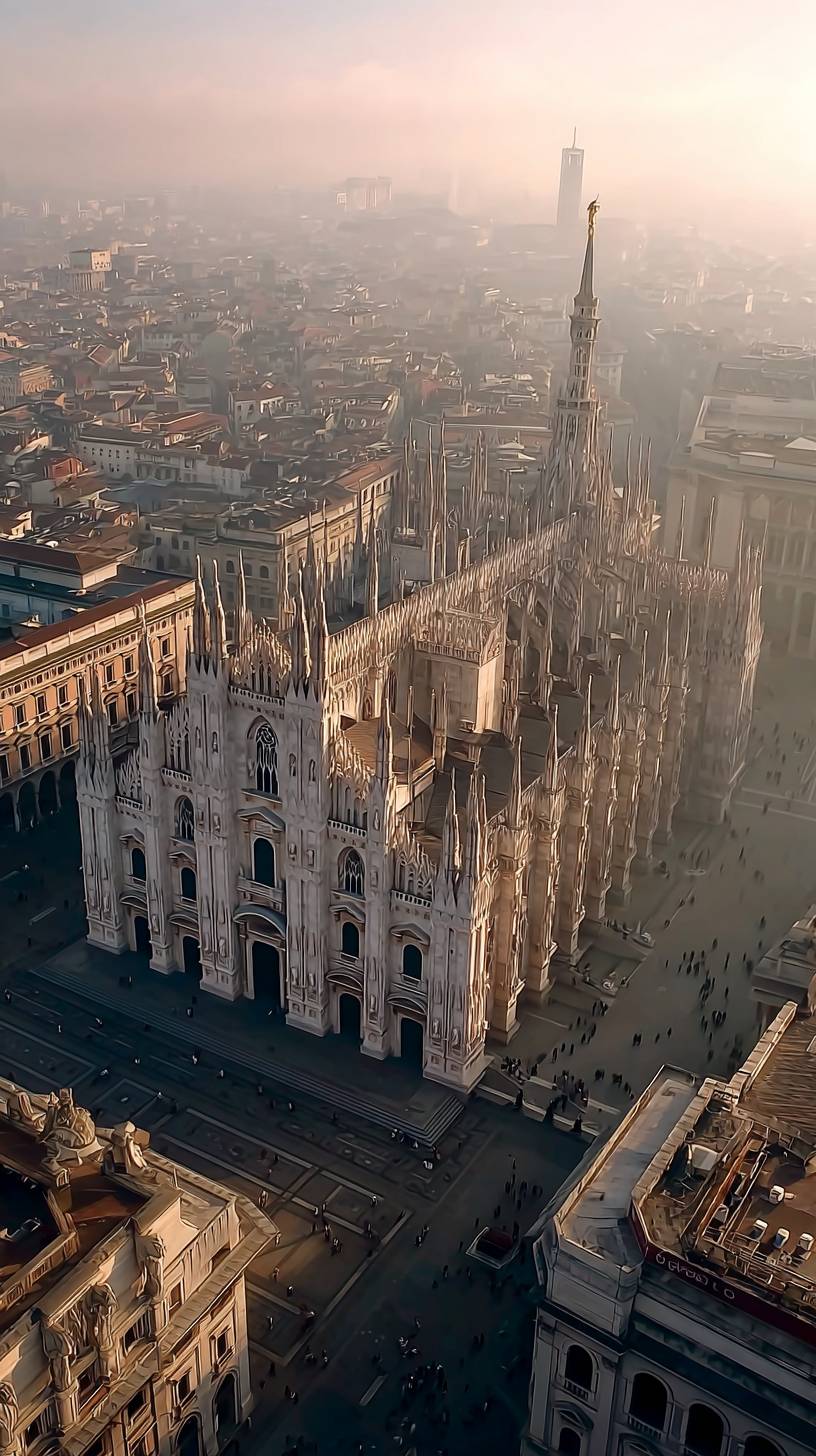
Living Milan also means learning its language
In such an international context, studying Italian in Milan takes on a special meaning. Language is not just a subject to learn, but a tool to fully experience the city — to understand what happens, participate in events, and build relationships.
For many international students, Milan represents an ideal environment for learning Italian through real-life experience, in a city that is dynamic, contemporary, and open to the world.

Those interested in this opportunity can explore the options offered by
Italian language schools in Milan within the ASILS network
,
where language learning is closely connected to everyday life in the city.
What remains after the Games
When the Olympic flame is extinguished, Milan will not simply return to its previous state. Improved infrastructure, stronger international connections, and a renewed global visibility will remain.
More importantly, the Games will leave behind a deeper awareness of Milan as a living city — capable of welcoming the world, adapting to change, and transforming extraordinary events into lasting experiences.
Milano–Cortina 2026 is not only a moment in time. It is a statement about who Milan is, and who it continues to become.
