


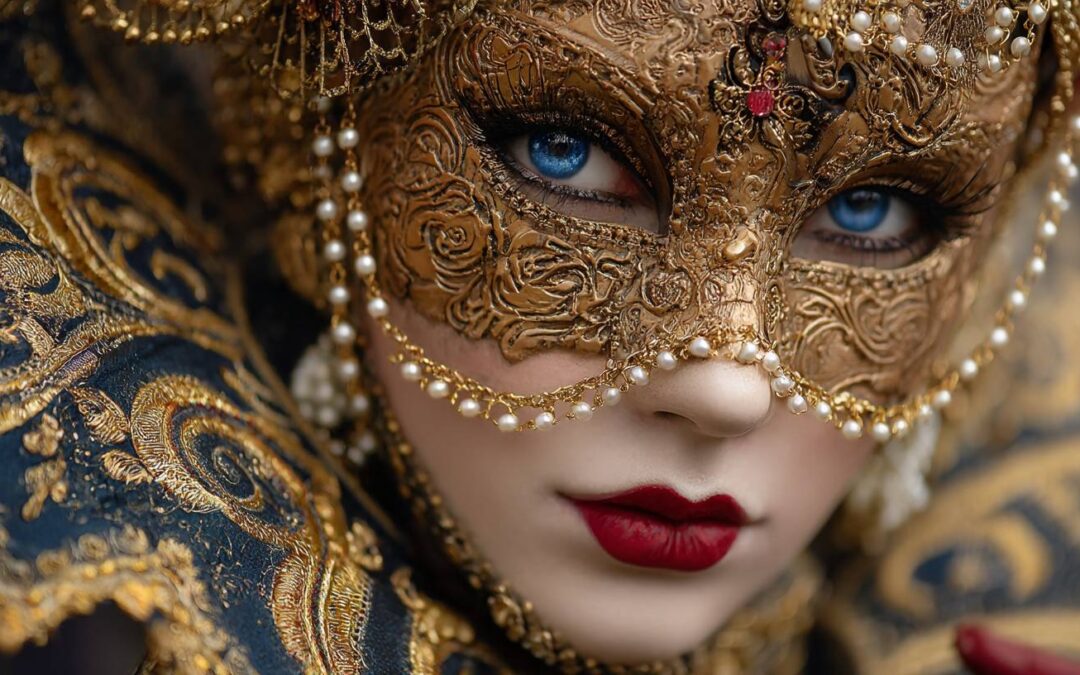
Carnival in Italy: masks, local sweets, and traditions from Venice to Viareggio to Milan
A cultural (and delicious) journey through Italy’s most iconic Carnival celebrations—plus practical tips for international students on when to go, where to stay, and how to experience it authentically.
Why Carnival matters in Italy
Carnival is not “one single event” in Italy—it’s a mosaic of local identities. Each city (and often each neighborhood) celebrates with its own
costumes, characters, dialect expressions, and, of course, traditional sweets. For students learning Italian, Carnival is a perfect moment to
experience culture beyond the classroom: you listen, taste, ask questions, and learn the language in real life.
In short: Carnival is Italian territoriality at its best—history, humor, craftsmanship, and regional pride in one season.
The origins of Carnival: meaning and tradition
The word Carnival comes from the Latin expression carnem levare, meaning “to remove meat”. Traditionally, it refers to the period before Lent,
when people prepared for a time of moderation. Before that, however, Italy celebrates with days of freedom, music, humor, and masks.
Wearing a mask is not just about fun: it is a symbol of transformation. For a short time, everyone can become someone else.
Watch Carnival in Italy: atmosphere, costumes & traditions
Video credit: YouTube –
Watch the original video here
.
Three unmissable Carnivals: Venice, Viareggio, Milan
Venice Carnival: elegance, mystery, artistry
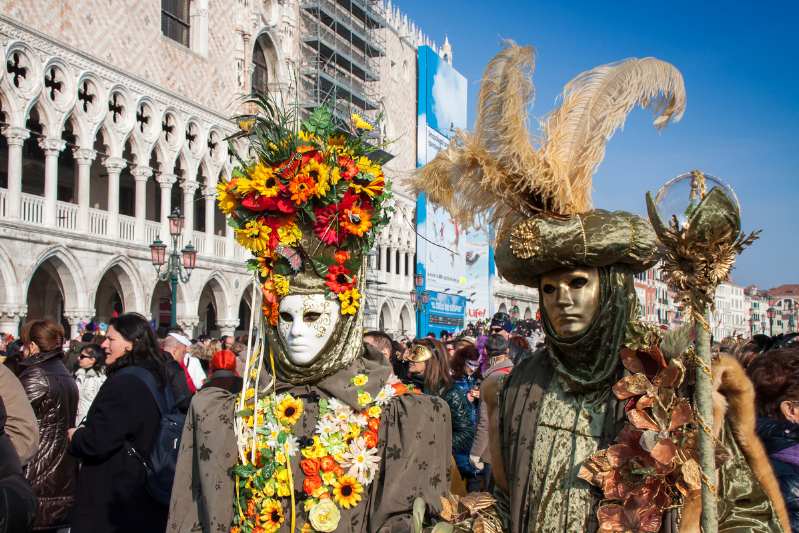
Venice becomes an open-air stage: historical costumes, refined masks, and timeless scenery. If you love photography, atmosphere, and traditions,
Venice is the dream destination.
- Iconic masks: Bauta, Moretta, the Plague Doctor.
- Student tip: go early in the morning for quieter streets and better photos.
- Planning tip: check the official calendar and main events on the official website.
Viareggio Carnival: giant floats and social satire
Viareggio is famous for its spectacular paper-mâché floats—huge, detailed, and often satirical. It’s one of the most impressive street shows in Italy.
- What you’ll see: masked parades (“Corsi Mascherati”) along the seafront.
- Tickets: parades usually require an entrance ticket (check in advance).
- Best experience: go on a Sunday parade date for the full atmosphere.
Milan’s Ambrosian Carnival: the “late” Carnival (and proudly local)
Milan follows the Ambrosian rite, so Carnival traditionally lasts longer than in many other parts of Italy. This makes it especially interesting for students living in Milan.
- What’s special: celebrations continue after the usual “Fat Tuesday” timeline.
- Atmosphere: events, costumes, and local celebrations across neighborhoods.
- Student tip: check city event pages for parades and family-friendly celebrations.
Traditional Italian Carnival masks
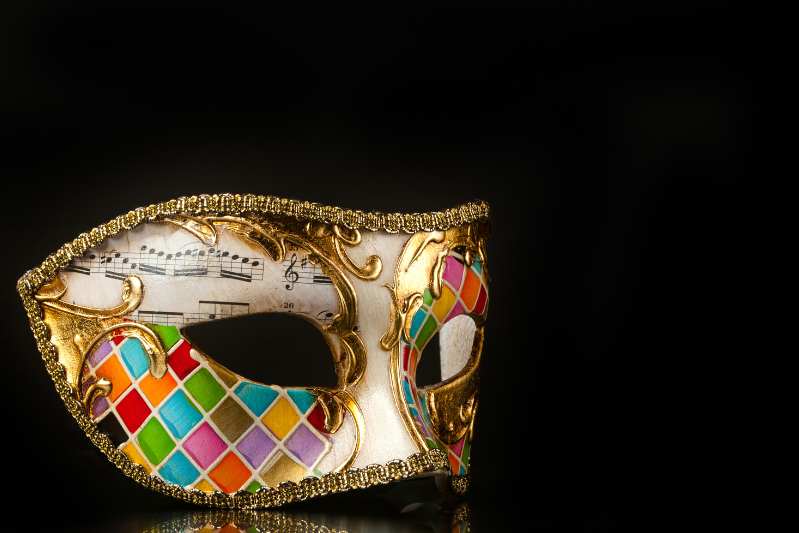
One of the most fascinating aspects of Carnival in Italy is the tradition of masks linked to the Commedia dell’Arte, a theatrical form born in Italy in the 16th century.
Many masks are not simply costumes: they are characters representing different regions and personalities.
- Arlecchino (Bergamo): energetic, clever, always causing trouble.
- Pulcinella (Naples): ironic, intelligent, and deeply symbolic of Neapolitan culture.
- Pantalone (Venice): the wealthy merchant, strict and often stingy.
- Brighella (Bergamo): cunning and opportunistic, often a servant character.
- Colombina (Venice): elegant, witty, and one of the best-known female masks.
Italian Carnival sweets: a map you can eat

The best way to understand Italian territoriality? Taste it. Many Carnival sweets are similar across regions, but names, shapes, and recipes change from city to city.
This is why Carnival is also a journey through Italy’s gastronomic identity.
Chiacchiere (aka frappe, bugie, cenci, crostoli…)
Thin, crispy, fried strips dusted with powdered sugar—available almost everywhere in Italy, but with different names depending on the region.
Castagnole
Soft fried dough balls, sometimes filled with pastry cream, ricotta, chocolate, or flavored with citrus and liqueur.
Venetian frittelle
The star of Venice: fluffy fritters, often with raisins and pine nuts, or filled with pastry cream. Many Italians consider them the most iconic Carnival sweet.
Milanese Carnival tortelli (Ambrosian tradition)
In Milan, during Ambrosian Carnival, you can find soft fried pastries filled with cream or chocolate—perfect after a walk through the city center.
When to go: the best time to experience Carnival
Carnival dates change every year, because they depend on the Easter calendar. However, celebrations usually take place between late January and late February,
with the most exciting events happening in the final two weeks.
- Fat Thursday: often the start of the most important celebrations.
- Carnival Sundays: the best days for parades and street celebrations.
- Fat Tuesday: the traditional end of Carnival in most parts of Italy.
- Ambrosian Carnival Saturday (Milan): the special “late” ending in Milan.
Student tip: if you want the best atmosphere, choose a Sunday parade. If you prefer fewer crowds and lower prices, go on a weekday.
How to organize your trip: practical student-friendly tips
- Bring a simple mask: you don’t need a full costume to join the fun.
- Wear comfortable shoes: Venice and Viareggio involve a lot of walking.
- Use trains: they are often the easiest option (historic centers may limit car access).
- Carry a power bank: very useful for maps, tickets, and photos.
- Respect costumed participants: many costumes are handmade; ask politely before taking pictures.
Where to stay during Carnival: accommodation tips for students
During Carnival weekends, accommodation prices rise quickly—especially in Venice. A smart student strategy is to stay just outside the main city
and commute by train.
Best “sleep outside, commute in” areas
- For Venice: Mestre (closest + budget-friendly), or day-trip bases like Padua and Treviso.
- For Viareggio: Pisa or Lucca are excellent bases (easy trains + often better value).
- For Milan: many neighborhoods work; even well-connected outskirts can save money.
Useful websites to find accommodation
- Booking.com (hotels, B&Bs, flexible cancellation options)
- Airbnb (apartments and private rooms, ideal for groups)
- Hostelworld (budget hostels, great for students)
- Spotahome (mid-term rentals for students in Italy)
- HousingAnywhere (international student accommodation)
- Uniplaces (student rooms and apartments, often for longer stays)
Extra tip: if you are traveling with classmates, renting an apartment together is often cheaper than booking multiple hotel rooms.
Plus, you can cook and save money during your trip.
Useful Italian vocabulary for Carnival
- maschera = mask / costume
- travestirsi = to dress up
- sfilata = parade
- carro allegorico = allegorical float
- coriandoli = confetti
- stelle filanti = streamers
Classic saying: A Carnevale ogni scherzo vale (“At Carnival, every joke is allowed”).
FAQ (click to open)
Do I need a full costume to participate?
Not at all. A small mask or accessory is enough to feel part of the celebration—especially in big cities.
What’s the cheapest way to see Venice Carnival?
Stay in Mestre (or another nearby city) and commute by train. Go on a weekday or early morning to avoid peak crowds and high prices.
Does Viareggio require tickets?
Yes, the parade circuit typically requires an entrance ticket. Check the official program before you go, especially for Sunday parade dates.
Why is Milan’s Carnival different?
Milan follows the Ambrosian rite, so Carnival traditionally lasts longer than in many other parts of Italy—one more reason to explore local traditions.
