


Press release
Overview
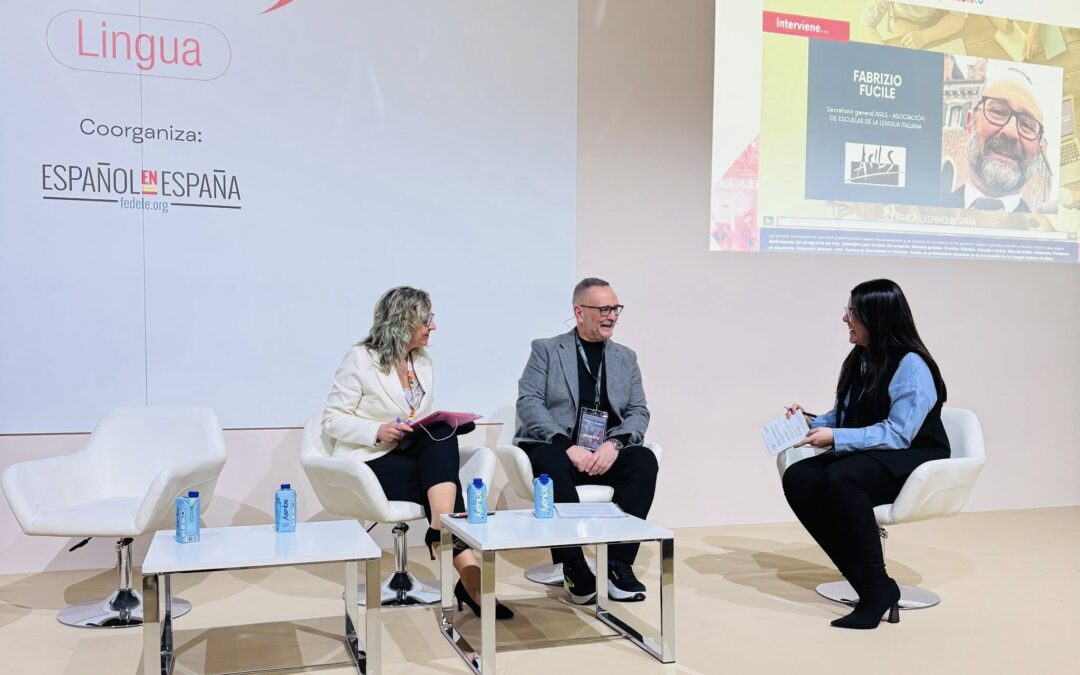
On 23 January 2026, ASILS (Associazione Scuole di Italiano come Lingua Seconda) took part in a high-level professional exchange during FITUR Lingua 2026, following an invitation from FEDELE, the Spanish association of language schools and ASILS’s sister organisation in Spain, which kindly covered travel and accommodation costs.
Representing ASILS, Fabrizio Fucile, National Secretary, joined a full-day programme dedicated to discussion and collaboration on the future of language tourism and international education, alongside leading European associations active in the sector.
Key topics addressed
The day focused on the evolving profile of the language learner and the strategic role of educational tourism, with sessions addressing:
- new motivations and expectations of language students;
- the impact of housing and urban development on destination attractiveness;
- innovative educational and cultural experiences;
- international cooperation as a driver of sustainable tourism;
- new strategies for the language tourism sector, including structured networking and sector meetings.
European associations in dialogue
Alongside ASILS, the exchange included representatives of major national associations:
- Eleri Maitland — Director of International Development, Groupement FLE (France)
- Huan Japes — Director of Membership & Interim Co-Executive Director, English UK (United Kingdom)
- Emilio Bordona — Vice President, ASEPROCE (Spain)
The session titled “New Educational and Tourism Experiences for a More Demanding Student” explored how destinations and schools can enhance quality through cultural activities, international partnerships, and diversified language offerings.
Participants reaffirmed the central importance of quality assurance and the ongoing monitoring of member schools, while also recognising shared challenges — including increasing complexity in student visa procedures.
ASILS proposals for European synergy
In agreement with its Executive Board, ASILS outlined two concrete areas for future cooperation at European level:
1) EU-level recognition and advocacy
Joint lobbying among European language-school associations to achieve formal recognition of the sector and to explore a harmonised European “language study visa” framework.
2) Institutional marketing and communication
Coordinated institutional communication through shared resources — including the possibility of a common press office to distribute editorials and high-quality content about accredited language schools, in collaboration with international agency associations.
Next steps
The ASILS Executive Board will follow up with further dialogue among European partners to assess the feasibility and development of these proposals, with the aim of strengthening international cooperation and reinforcing the role of quality language education within European educational and tourism policies.
ASILS — Associazione Scuole di Italiano come Lingua Seconda®
Segreteria nazionale • Roma • www.asils.it
